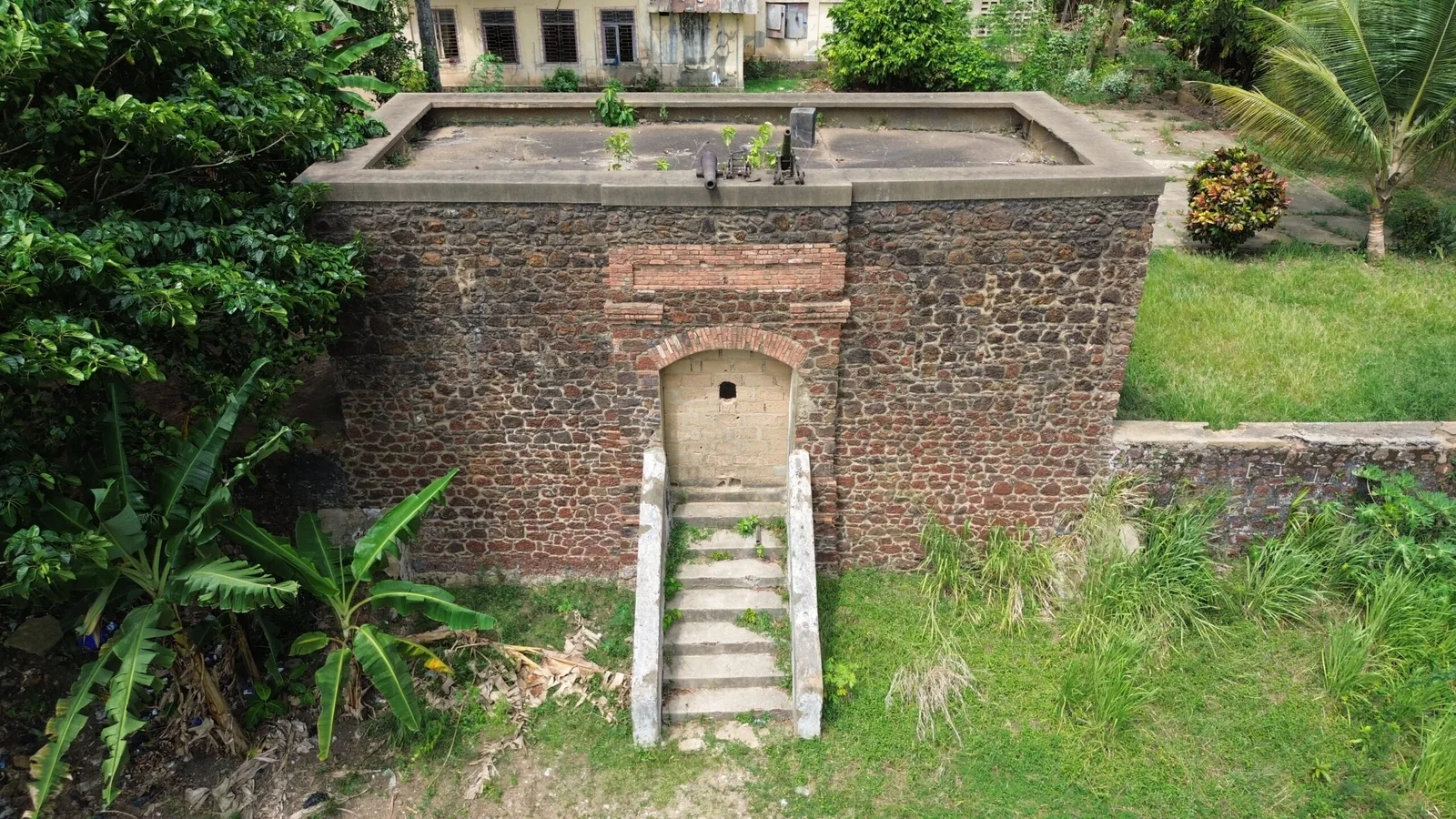
Located in the Dabou region of Côte d’Ivoire, in the Bastos quarter, the Fort of Dabou is a living reminder of the area’s turbulent history. Strategically erected, this bastion has survived the ages, retaining traces of its construction and the scars of conflicts that marked its existence.
A military asset and architectural work
The Fort of Dabou was built in the nineteenth century, a period marked by colonial expansion in West Africa. Constructed in 1853 by General Louis Faidherbe, it was intended to serve as a point of control and defence in the region. It was positioned strategically to watch the main approaches to the Dabou coast and deter incursions, including those by other colonial powers. It faces the sea and offers a panoramic view of this part of the region.
Parallelogram-shaped, it has four sides of roughly forty metres each and stands six metres high. Built of stone and earth, the Fort of Dabou recalls the skill of the workers and engineers of that era.
A symbol of conflict and resistance
During periods of political instability and war before Côte d’Ivoire’s independence, the fort played a crucial role in defending the interests of French colonists, who were attacked by other imperial powers such as the Spanish. Its walls sheltered civilians and fighters, offering vital protection from enemy attacks. The Fort of Dabou also silently witnessed many conflicts that shook the region. During the colonial period, it was the scene of confrontations between French forces and indigenous populations, marking the beginning of its turbulent history.
The Fort of Dabou is far more than a stone structure. It is a historic monument whose centuries-old walls invite us to reflect on the past, present and future of a region marked by the passage of time.