The Kouya are a forest-dwelling people living chiefly in west-central Côte d’Ivoire, particularly south of Vavoua, north of Daloa and west of Man. They belong to the Krou group and are among Côte d’Ivoire’s smallest and least-known ethnic communities.
Traditional way of life
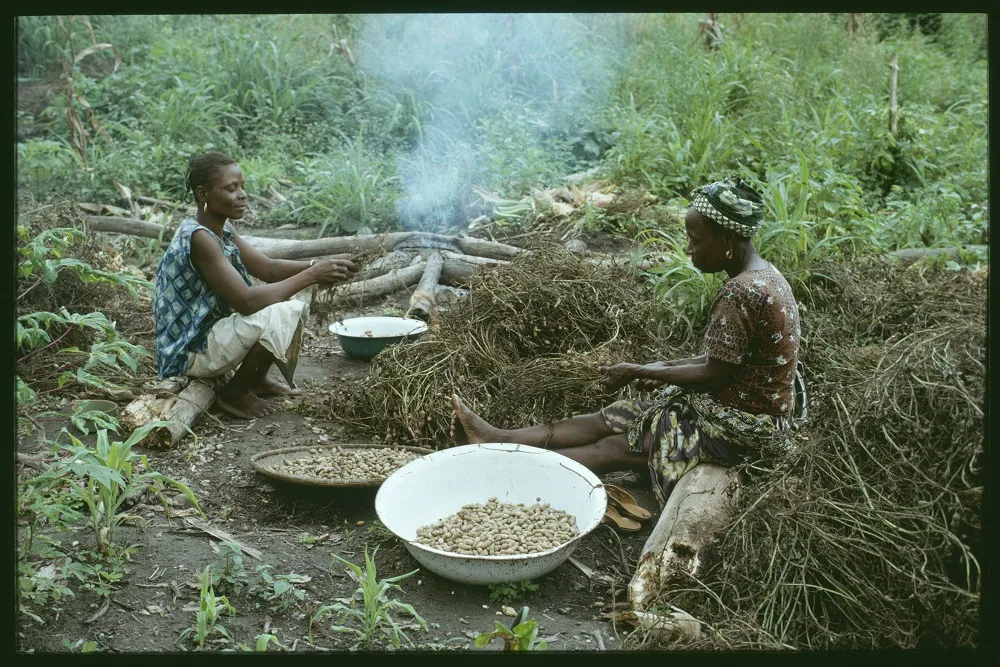
The Kouya have traditionally farmed and hunted. Their way of life is deeply tied to the forest, where they grow food crops and hunt for sustenance. The division of labour is well defined: men hunt and defend the territory, while women work the land, light fires, fetch water and care for children.
Environmental pressures and conflict
Deforestation and climate change have radically transformed their environment. Forests once rich in resources have become degraded areas, causing food shortages and a decline in game. The conflicts between northern and southern Côte d’Ivoire in 2002–2003 and 2010–2011 also placed the Kouya at the heart of a war zone, forcing them to adapt to an unstable situation.
The influence of Christian missionaries
The arrival of Christian missionaries in the region has also had a significant effect on the Kouya way of life. This influence has helped transform traditional cultural and religious practices, although its precise impact differs between people and communities.
Language and culture
In 2001, the Kouya language was declared one of the world’s most endangered languages. This reflects the cultural vulnerability of this people in the face of external pressures. Their rich culture of traditions and rituals is threatened by modernisation and urbanisation, which are gradually eroding long-standing practices. The Kouya people are a poignant example of the fragility of traditional societies facing modern challenges. Despite these difficulties, they continue to adapt and seek to preserve their cultural identity.